Showing posts with label books. Show all posts

Monday, July 29, 2013

When We Were Orphans By Kazuo Ishiguro

When We Were Orphans

This is my fourth Ishiguro novel, with the first three being Never Let Me Go, The Remains of the Day, and A Pale View of Hills. Like the other three novels, this one also has an elaborate prose as well as an unreliable narrator, both of which are elements that I appreciate.

Tuesday, June 25, 2013

殺意

As the its title (Murderous Intent) suggests, this novel is a thriller/mystery. In the novel, there is a high school girl whose birthday is on February 29th, and on each of her last three birthdays, a girl was raped and killed. This girl also has a friend whose grandfather is a rich businessman. His weird sexual desires causes him rape his maids and sleep with young girls...

Unfortunately, even though was very intense to read, the plot was just horrible. Many things are explained improperly or are illogical, and the rape killings that happen once every four years have nothing to do with the actual storyline.

Terrible, terrible, novel.

Friday, June 21, 2013

The Old Capital By Yasunari Kawabata

Front cover of The Old Capital, 1961 Novel by Yasunari Kawabata.jpg

The Old Capital by Yasunari Kawabata describes the story of Chieko, an adopted daughter of a couple who own a kimono wholesale business.

The novel is very quiet. It paints a beautiful picture of Kyoto, and a large portion of the novel is used to describe Kyoto's scenery. The same kind of serenity is reflected in the characters's emotions. Even when the characters are extremely emotional, the prose is not lugubrious; it often just allow the readers to see the emotions through the conversations between the characters.

(spoiler ahead)

Friday, September 7, 2012

The Catcher In The Rye by J. D. Salinger


I recently read the famous novel The Catcher in The Rye by J. D. Salinger, after seeing it in book stores and reading lists so frequently.

However, I really don't have much to say about this book, which is why it's five days after I finished the book and I still haven't written a post about it yet. This is probably because I don't have much connection with the narrator; we are simply two very different teenagers with different family backgrounds as well as values and concerns. Not to mention that Holden is a teen in the 1950s and lives in New York; even our societies are tremendously different.

Tuesday, September 4, 2012

The Murder of Roger Ackroyd by Agatha Christie


The murder of Roger Ackroyd is undoubtly one of the most famous works of Agatha Christie, with many stating that it is her masterpiece. However, I personally only liked it as much as many of her other works, perhaps because I accidentally read a spoiler of it while reading the review of another book.

(spoiler ahead)

Saturday, August 25, 2012

Top 100 Books from BBC

I recently stumbled across Facebook's book list challenge, which (falsely) states that BBC claims the average person has only read 6 items out of a total of 100.  It's actually not a very good book list challenge, because items like "complete works of Shakespeare" simply don't make sense (especially when Hamlet is another item). Also, the book list itself is from the Guardian...

So I have decided to use BBC The Big Read'top 100 books for my book list challenge.

Here's where I stand as of August 2012:

Enduring Love by Ian McEwan


On a windy day, the pilot of a helium balloon fails to anchor it properly, causing the balloon to go afloat with a child still in it. Several men at the scene help out by holding onto the ropes of the balloon and weighing it down, but the pilot— who has been trying to get the child out— accidentally falls out of the basket when a strong wind comes, and this causes the balloon to rise up in the air. One of the man lets go of the rope, then three others follow suit, leaving only one man who hangs on with the balloon high up in the air. His grip eventually weakens, and he falls to his death.

After this accident, the narrator— who has been helping out— makes eye contact with Jed Parry, who has also been trying to help. At this moment, Jed Parry believes that the narrator is in love with him, and thus begin their unpleasant entanglement...

Thursday, August 23, 2012

Fight Club by Chuck Palahniuk


Although Fight Club is both a popular movie and novel, I didn't know what it was about until roughly a week and a half ago, when I searched it up on Wikipedia after a friend of mine had recommended it to me. At the time I was quite intrigued by the psychological element of the book, and— fueled by my friend's recommendation—decided to borrow and read it.

Judging by the fact that I have actually finished the book already, you can guess that it isn't a bad book; normally it takes months for me to actually get to and finish a book on my book list. Indeed, I thought the book was interesting and reasonably fast-paced, and had a very good twist.  However, I can't say that I liked it very much, either.

Summary of Fight Club


The novel starts at a point very close to the ending, where Tyler and the unnamed narrator stand on a tilting building that is about to explode, and Tyler is pointing a gun into the unnamed narrator's mouth.  The narrator then goes on to describe his circumstances and all the events that have led to the final moment.

Tuesday, August 21, 2012

"Too Asian?"


Being an Asian, I was immediately drawn to the title of this book when I saw it in the UBC book store. This is why I have so quickly gotten a copy of it after I came back to Toronto. To clarify, the full name of the book is "Too Asian?": Racism, Privilege, and Post-Secondary Education, and it has several authors, who each writes one or more chapters/essays.

Monday, August 13, 2012

Atonement by Ian McEwan


To be honest, I was a little disappointed by Atonement by Ian McEwan. Not because it was a bad book— I thought it to be quite good— but because it was kind of over-hyped. When a book is listed under TIME magazine's 100 best novels of all time and named as one of the 10 best books of the decade by the Guardian, you would naturally expect a lot of it. And unfortunately, this book didn't live up to the high expectation that I had for it.

Monday, August 6, 2012

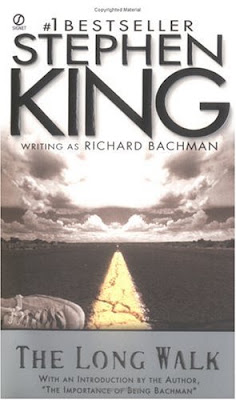
The Long Walk by Stephen King


The Long Walk by Stephen King was recommended to me by a friend, and upon hearing the premise of the story, I immediately wanted to read it.

The novel centers around 16-year-old Ray Garraty, who is a competitor of the Long Walk. The Long Walk is an annual walking competition consisting of 100 boys who have volunteered to be in it. Once the competition starts, the walkers have to keep a pace of 4 miles per hour, or else they get a warning. If a walker' speed drops below 4 MPH after his third warning, he will "buy a ticket," which is a euphemism for being shot dead. Then, the competition continues until there is only one walker alive...

Saturday, August 4, 2012

Peril at End House by Agatha Christie


In Peril at End House, a young woman named Magdala Buckley— nicknamed Nick— has had three near escapes from death. Once a heavy painting fell off from the wall and almost hit her, once her car wouldn't brake, and another time a huge boulder fell and almost hit her car. Then, when she was talking to Poirot, a bullet went straight past through her hat, almost killing her...

Seeing that she was in danger, Poirot tried his best to protect her. However...

Spoiler/Plot development:

Thursday, August 2, 2012

Full Dark, No Stars by Stephen King

File:Full Dark, No Stars.jpg

The book Full Dark, No Stars contains four short stories by Stephen King, although two of them are so long that I think can be classified as novellas. In any case, the title perfectly indicates the mood of these stories— all four of them are extremely morbid, to a point that would make readers shiver.

Saturday, April 7, 2012

The Evolution of Cooperation by Robert Axelrod

image taken from here
In The Evolution of Cooperation, Robert Axelrod studies the evolution and nature of cooperation through his two computer tournaments of prisoner's dilemma. In both of his tournaments, the winning program employs the tit for tat strategy, and he attributes the success to:
  • Being nice: it always cooperates unless the opponent defects
  • Provocable: one provoked (being defected), it is quick to defect on the next turn. Thus it is not exploitable.
  • Forgiving: it forgives the opponent for defecting as soon as the opponent switches to cooperating. This makes it easy for the two sides to restore to mutual cooperation
  • Clarity: its strategy is very clear, allowing the opponent to know that it is best to cooperate with it
In the book, the author also discusses how this might come in play in many situations, the "stability" of such a strategy, as well as how to encourage or discourage cooperation.

My Sister's Keeper by Jodi Picoult


In My Sister's Keeper by Jodi Pocuolt, 13-year-old Anna Fitzgerald was born with the intent that her cord blood would cure her sister, Kate, of Leukemia. However, Kate started relapsing five years after Anna's birth, requiring Anna to donate her blood, bone marrow, and— finally— kidney. This prompts her to sue her parents so that she can get medical emancipation from them.

From this, it is quite clear that the book centers on the issue of organ transplantation. It raises many questions regarding the ethics of organ transplantation, and lets the readers to deliberate over them. For example, should parents be able to genetically screen the embryos of their children, to ensure that the children can become matching donors for their older siblings?

What amazed me, though, was how the author managed to show the dynamics and complexity of Anna's household. By including narrations from each of the family members (except Kate), Picoult successfully illustrated the complicated relationships between each pair of family members and the conflicting emotions of them. To me, this was great because it demonstrated the extent to which a family could be affected by the issue; it showed the human and emotional— as opposed to the legal —side of the story.

In my opinion, though, the book had some flaws. For one, I found it entirely unnecessary to include Julia's and Campbell's (the lawyer's) relationship— I just don't see how it's relevant! Also, I quite disliked the ways in which Anna interacted with Campbell. She was always extremely rude and disrespectful, which didn't seem to match her personality depicted throughout the other parts of the novel.

Overall, I definitely think that this is a novel that is worth reading. It has a unique theme, as well as a good storyline. There were some parts that I didn't like, but for the most part it was good and thought-provocative.

Sunday, March 18, 2012

How to Lie With Statistics by Darren Huff


From its title, one would probably guess that the book is about how statistics can be misleading. Indeed, the book discusses the various forms of bias that we may see in statistics, including sampling bias (unrepresentative population), data-collection bias, misleading representations/uses of data, etc. It uses real-life examples to show how data can be distorted with various techniques.

The things discussed in the book are all quite straightforward. In fact, I have learnt all of them in my data management class already. Nevertheless, I liked the succinctness and clearness of the book as well as the humourous illustrations used to demonstrate the concepts. In short, How to lie with statistics is a stress-less and light read that may teach you some important and useful things.

Thursday, March 15, 2012

The Remains of the Day by Kazuo Ishiguro


In The Remains of the Day by Kazuo Ishiguro, Stevens, an old English butler, goes on a journey to the countryside and reflects on the events and decisions that he has made in the past.

Because of his devotion to his profession— and his belief in "dignity"— Stevens has been holding back his emotions for his entire life. This includes the time when he didn't properly morn for his father's death because of an important event in the gentleman's house, as well as the time when went against his personal belief and fired two Jewish maids under his master's will. In short, Stevens chose the "professional" path, and sacrificed his own emotions and private life; all his concerns were those of his professionalism, and none of which is of his own well-being.

When reading the novel, I could sense the narrator's sadness, his melancholy. However, due to my young age and inexperience in life, I could never fully appreciate the extent of the sadness. So, if it's possible, I would like to read this novel again a few years later, and perhaps get a deeper understanding of the novel. Also, just as an afterthought, this book was beautifully written and very compelling.

Wednesday, March 14, 2012

The Hunger Games by Suzanne Collins


When I heard about this book last October, I immediately reserved a library copy of it. However, the book was so popular that there were more than one thousand people waiting in line before me, and consequently I have only gotten my copy a few days ago (that's a 5-6 months wait!).

Fortunately, the book didn't disappoint me. In fact, it was better than I had expected! Before I started reading the book, I had imagined this book to be children-oriented and perhaps quite like Rick Riordan's Percy Jackson and the Olympians series. However, a few pages into the novel, I was already struck by the sophistication of the narrator. Also, this book was unimaginably fast-paced and suspenseful; I simply couldn't stop reading it until I was on the very last page.

One thing that disappointed me a bit, though, was that the author had twisted the plot such that Katnis never had to kill Peeta or Rue. For me, this was the moment that I was looking forward to the most, for I really wanted to see how the author would portray Katnis's conflicting emotions over killing them. But I suppose this was too hard a task for the author, for it would be difficult for her to do so without somehow destroying Katnis's character.

Anyway, I really liked this novel. I was not only drawn to the intense plot, but also the characters, who were believable and likable. I am looking forward to reading the novel in the series, Catching Fire.

Friday, March 9, 2012

The Positive Power of Negative Thinking by Julie K. Norem


As the title indicates, the book discusses the ways and benefits of thinking negatively. Basically, when a person is feeling anxious about something, one way to combat this anxiousness would be to think of all the negative possibilities of the thing and to plan to prevent (or to know how to react to) those negative possibilities. This way, the person can feel more in control of the situation, and can often react well to obstacles.

Obviously, the things discussed in the book don't apply to everyone, and many of them don't apply to me. However, when reading the book, I did find some parts of it to be important to me. For example, the book describes procrastination as a self-handicapping action, where the person handicaps themselves so that if they fail, they can attribute the failure to "doing the task last minute," rather than their own inability. And although this may seem like a working strategy, it definitely has many drawbacks, including being constantly behind schedule, being viewed as undependable, and— obviously— having poor quality work. So next time I want to procrastinate, I shall think about the negative consequences of doing so.

Also, part of the book talks about how confidence and positive illusions can have negative effects on a person's performance. I should watch out for them in the future.

Overall, I think this book an interesting book for quick-reading, and at the same time one that contains helpful information. Read it, especially if you consider yourself as a pessimist.